7001
The Invisible Value of High-End Gear: It’s All About “Reliability”
When you’re deep in the backcountry and a sudden gale hits your campsite, the true value of a high-end tent isn’t its aesthetic or the brand logo—it’s the unwavering reliability of its skeleton. While novice campers often focus solely on weight, seasoned professionals and gear junkies look for that perfect balance of high elasticity and structural integrity. This “snap-resistance” isn’t a coincidence; it is the direct result of a rigorous and highly controlled Drawing process.
Many people confuse extrusion with the final product. However, raw extruded pipes are often inconsistent, structurally unrefined, and lack the precision required for high-tension trekking poles. To transform these raw tubes into the sleek, resilient poles we trust, they must undergo “Cold Working” through a drawing process. This physically compresses and realigns the metallic grain structure at a molecular level. Having spent over a decade analyzing outdoor gear manufacturing, I can tell you that the 0.02mm margin in this process is exactly what separates a lifesaver from a liability when nature gets angry.
1. The Mastery of Die & Plug: Engineering to the 0.02mm Margin
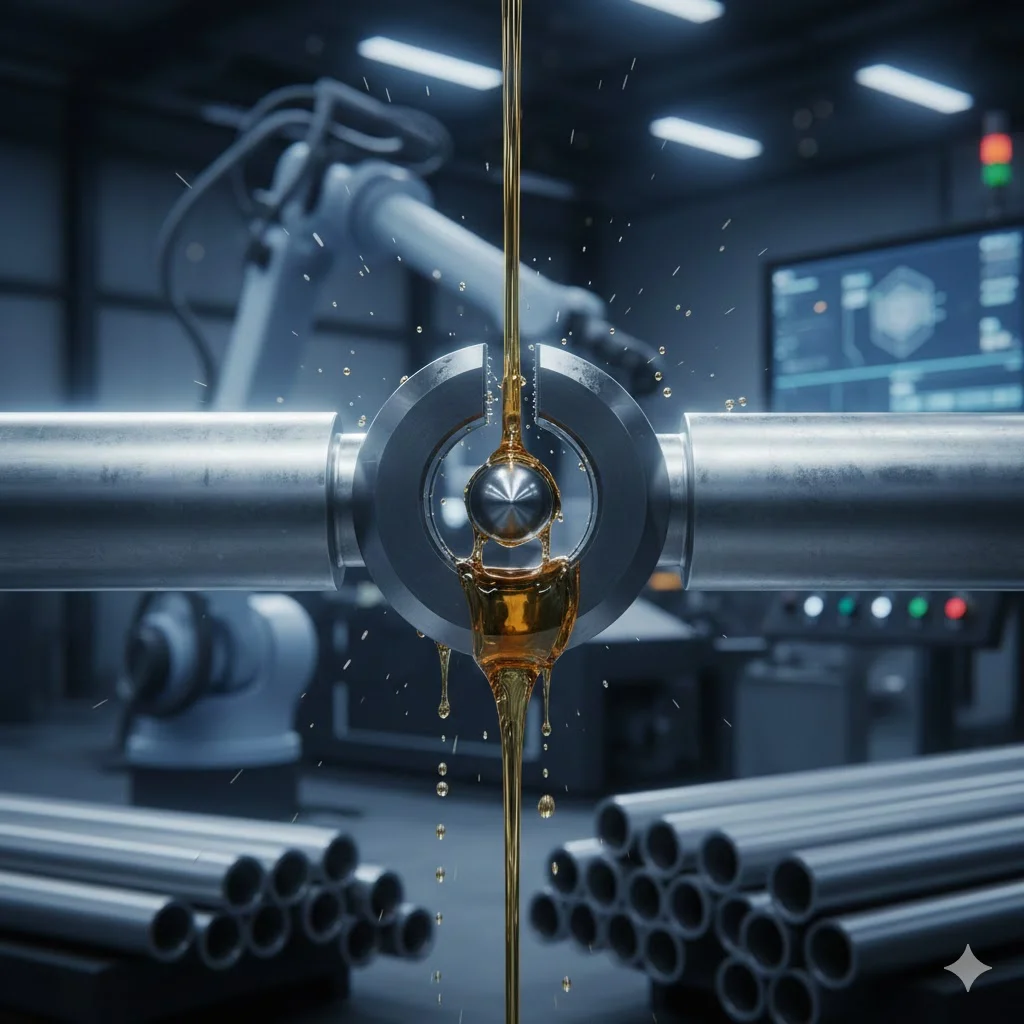
The drawing process is essentially a high-tension operation where the aluminum pipe is forced through a precision-machined “Die” (which dictates the outer diameter) while an internal “Plug” controls the inner diameter and wall thickness. In high-end manufacturing, especially for alloys like 7001-T6, we operate within a staggering tolerance of ±0.02mm.
Why go through such painstaking trouble for a mere fraction of a millimeter?
- Tolerance Harmony: Even a microscopic deviation can throw off the “allowable tolerance” between the pole and its connector (insert). If the fit is too loose, the joint wobbles; if too tight, it creates stress risers.
- Stress Distribution: Inconsistent wall thickness means the pole will not bend uniformly. This mismatch causes uneven stress distribution, which is the primary culprit behind poles snapping at the joints under heavy wind loads.
- Tactile Precision: For the end-user, this precision translates into a seamless assembly experience where every section clicks into place with satisfying, airtight accuracy.
In the world of premium gear, consistency isn’t just a goal—it’s the ultimate form of durability. Without this level of precision, the entire architectural integrity of a geodesic or tunnel tent is compromised.
2. Strategic Area Reduction: The Art of Grain Management
One of the most critical, yet misunderstood, metrics in engineering a high-performance pole is the Area Reduction Rate (ARR). You cannot simply stretch metal thin in a single pass. Attempting to do so with a high-strength, low-ductility alloy like 7001 would cause internal micro-fractures, structural “necking,” or even catastrophic failure during production.
To ensure long-term structural integrity, the drawing process must be synchronized with Intermediate Annealing (Softening). By heat-treating the metal to a “soft” state, we allow the grain structure to be rearranged without breaking the metallic bonds.
| Drawing Stage | Recommended Area Reduction | Technical Objective | Key Characteristic |
| Primary Draw | 25% – 30% | Base Geometry | Utilizing post-anneal ductility for significant deformation. |
| Secondary Draw | 15% or Less | Dimension Refinement | Stabilizing the internal grain and ensuring wall uniformity. |
| Final Pass | Optimized Ratio | Final Temper & Straightness | Locking in elasticity and achieving the “Mirror Finish.” |
This multi-stage approach is why premium poles feel “alive.” They possess a high “Modulus of Elasticity,” meaning they can bend significantly under pressure but will always snap back to their original straight form without taking a permanent set. This is a level of performance that budget 6000-series aluminum simply cannot match.
3. Straightness and Surface Quality: The Hidden Science of Drawing Oil
The final hurdle in manufacturing a masterpiece is achieving perfect Straightness and Surface Roughness. If a pipe isn’t perfectly straight from the factory, the tent will not form a clean, aerodynamic arc. Instead, it will have “kinks” or flat spots that attract wind resistance. Furthermore, the surface must be flawlessly smooth; any “chatter marks” (vibration ridges) from the drawing process will lead to uneven dye absorption during the subsequent anodizing process.
This is where the unsung hero, Drawing Oil, comes into play. In a professional facility, this isn’t just “lubricant”—it’s a highly managed chemical system:
- Seasonal Viscosity Blending: Metal reacts to temperature. We adjust the oil’s viscosity depending on the ambient factory climate—using higher viscosity blends in winter to maintain a consistent “hydrodynamic film” between the die and the metal.
- Sludge Filtration and Purity: As the oil circulates, it inevitably picks up aluminum micro-particles (sludge). If this sludge isn’t filtered to a sub-micron level, it acts like sandpaper, creating deep longitudinal scratches. These scratches aren’t just ugly; they are “stress concentrators” where a crack can start.
- Friction-Induced Heat Management: Drawing generates immense heat. Proper oil flow ensures the pipe doesn’t “work-harden” prematurely, which would make the aluminum brittle.
Conclusion: Why the 0.02mm Difference Defines the Brand
Ultimately, the difference between a $500 tent and a $1,500 tent often lies in these invisible details. Drawing isn’t just about “shaping” metal; it’s about refining it, strengthening it, and ensuring it can survive the harshest environments on Earth. High-end brands like Helinox or DAC command a premium because they invest heavily in these R&D-intensive process controls.
As an expert who has seen both the manufacturing floor and the peak of a storm-lashed mountain, I can assure you: the engineering that goes into that 0.02mm margin is what keeps your shelter standing when everything else fails. The strength of a 7001 pole starts long before you pitch your tent—it is forged in the precision of the draw.
[Technical Checklist for Premium Pole Selection]
- [ ] Dimensional Tolerance: Is the outer diameter variance strictly within ±0.02mm across all sections?
- [ ] Grain Flow: Has the material undergone multi-stage reduction to ensure a dense, fibrous grain structure?
- [ ] Straightness Audit: Do the sections align perfectly without “dog-legging” at the joints?
- [ ] Surface Integrity: Is the finish free of chatter marks and longitudinal scratches before anodizing?
- [ ] Elastic Recovery: Does the pole return to 180° straightness after a 30° flex test?