
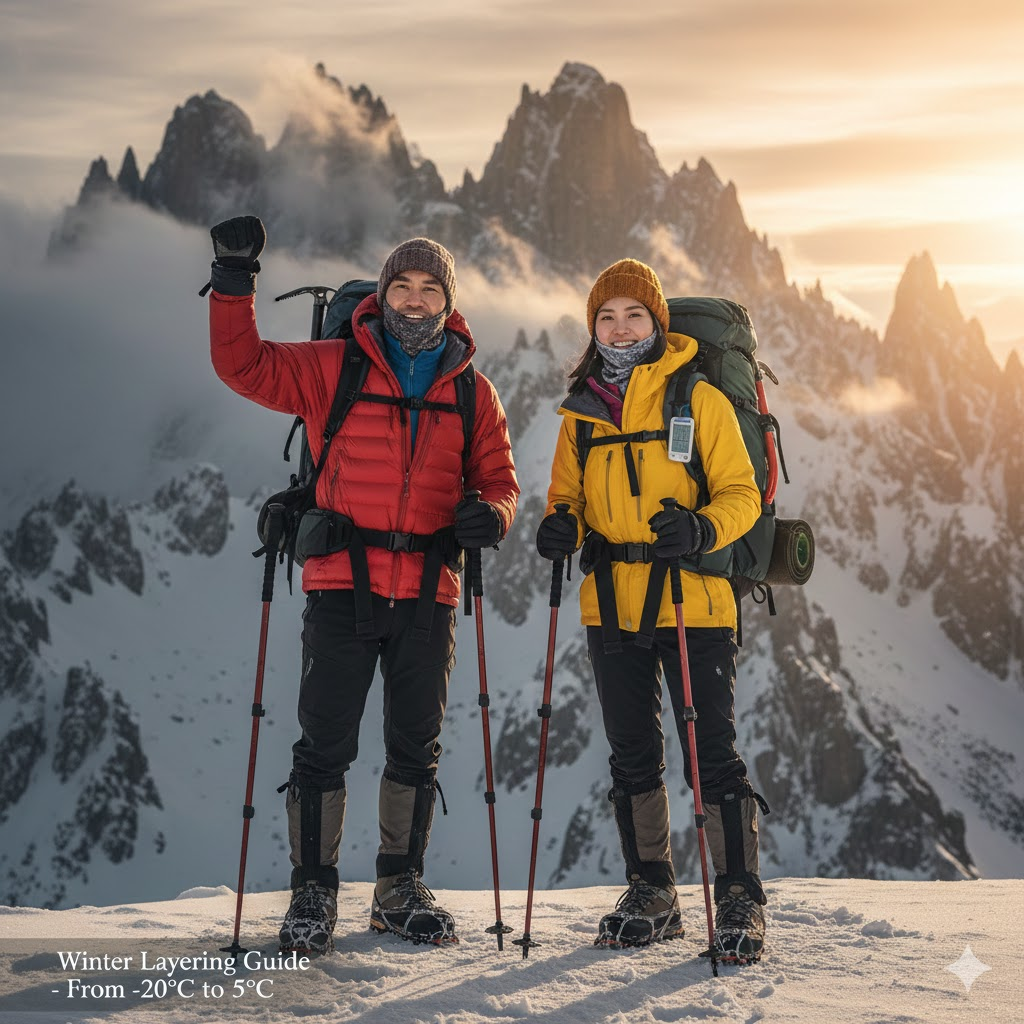
1. The Science of Thermal Regulation in Sub-Zero Conditions
outdoor
Winter outdoor activities are not just about enduring the cold; they are about managing the delicate balance of heat and moisture. In an environment where temperatures drop to -20°C, a poorly managed clothing system is not just uncomfortable—it is a critical risk factor for hypothermia.
“Strip Before You Sweat, Layer Before You Chill”
The primary enemy in winter is not the external cold—it is your own sweat. In freezing temperatures, moisture is a rapid conductor of cold. If your inner layers get soaked, they will strip away your body heat faster than the freezing air itself. Many beginners make the mistake of over-dressing at the start of a hike, leading to excessive sweating that eventually freezes during breaks.
The Strategy at the Trailhead and Back Sweat
When you start your hike, you should feel a bit chilly. This “comfortably cool” feeling ensures that as your heart rate rises, your body temperature stays within a safe range. One of the most overlooked factors is back sweat. Because your backpack acts as a massive block to airflow, your back will begin to heat up and sweat long before the rest of your body feels warm. You must be proactive—remove a layer or unzip your shell even before you feel “hot.” If you reach the summit with a drenched back, the wind will turn that moisture into ice, causing your energy levels to plummet instantly.
2. [Reference Table] Professional Layering & Gear Matrix
| Temp Range (°C) | Upper Body Configuration | Footwear & Lower Body | Essential Safety Gear |
| -20°C to -15°C | Thermal + Long-sleeve + Synthetic Puffy + Expedition Parka | Heavy Thermal Tights + Hard-shell + Boots | Crampons, Balaclava, Mittens, Heat Packs |
| -15°C to -10°C | Thermal + Long-sleeve + Synthetic Puffy + Windbreaker | Mid-weight Leggings + Thick Pants + Boots | Crampons, Aluminum Poles, Wool Socks |
| -10°C to -5°C | Tech Tee + Synthetic Puffy + Windbreaker | Brushed Lining Pants + Hiking Boots | Crampons, Beanie, Aluminum Poles |
| -5°C to 0°C | Tech Tee + Fleece Jacket + Wind Shell | All-season Outdoor Pants + Hiking Boots | Crampons (Mandatory), Gloves, Knee Brace |
| 0°C to 5°C | Thin Base Layer + Windbreaker or Vest | Stretch Hiking Trousers + Hiking Boots | Poles, Light Beanie, Energy Gel |
3. Material Selection: Why Synthetic Insulation Beats Down in the Wild
While goose down is the king of warmth-to-weight ratio, it has a fatal flaw in high-exertion outdoor activities like trekking or mountain climbing.
- The Down Trap: Down feathers lose their loft and insulating properties as soon as they get wet. Once your sweat saturates a down jacket, it becomes a heavy, cold mess that is nearly impossible to dry in the field.
- The Synthetic Advantage: Synthetic insulation (such as Primaloft) is designed to mimic the structure of down but remains effective even when wet. It retains up to 70-80% of its warmth when damp and dries much faster. For anyone who tends to sweat during movement, synthetic “puffies” are the superior choice for staying warm and safe.
4. Survival Hardware: Professional Gear Selection for Winter
Trekking Poles: Aluminum (Duralumin) vs. Carbon
In freezing temperatures, material reliability is a matter of safety. We recommend folding aluminum poles over carbon or sliding/twist-lock designs. Twist-locks often suffer from mechanical failure in sub-zero temps—the internal components can shrink or freeze, causing the pole to collapse unexpectedly when you lean on it.
Regarding materials, Duralumin (High-grade Aluminum) is the professional choice. While carbon is lighter, it is brittle. If a carbon pole snaps under extreme stress in the cold, it shatters into razor-sharp, needle-like shards that can cause secondary injuries to your hands or legs. Aluminum is much more resilient; it might bend under pressure, but it won’t shatter, providing a safer margin for error.
Boots and the “5-Year Rule”
High-cut boots are essential for ankle support and preventing snow from entering your shoes. However, you must pay attention to the age of your boots. Even if the treads look deep, rubber outsoles harden and oxidize after 5 years. This hardening makes the boots dangerously slippery on rock and ice, regardless of the brand’s reputation. Always check your gear’s manufacturing date.
Crampons: The Non-Negotiable Necessity
If the temperature is below freezing, crampons (ice spikes) must be in your pack. The trail at the trailhead may be clear, but the upper ridges are often covered in invisible black ice. I have personally seen many hikers suffer severe injuries, such as torn shoulder ligaments, because they tried to descend a frozen trail without spikes. Going up is a choice; coming down safely is a necessity. Don’t be the hiker who gets stuck halfway because you didn’t want to carry an extra few grams.
5. Energy Management and Post-Hike Recovery Strategies
Winter hiking burns significantly more calories as your body works overtime to maintain its core temperature.
- Proactive Fueling: Hard chocolate bars can become “bricks” at -15°C. Stick to soft energy gels, nuts, or warm honey water in a vacuum flask to keep your internal furnace burning.
- Hydration: You might not feel thirsty in the cold, but you are still losing water through breathing. Keep your water bottle inside your pack or use an insulated sleeve to prevent it from freezing.
- The Dry Transition: Always keep a spare set of dry clothes and a heavy jacket in your vehicle. Changing out of damp base layers immediately after the hike is the best way to prevent the “post-hike shivers” and maintain your health for the next adventure.