
In our previous deep dive, we explored the foundational stage of high-end tent pole manufacturing: The Extrusion Process. While extrusion is the vital first step that gives aluminum its tubular shape, it is important to understand that 7001 aluminum, straight out of the extrusion press, is not yet the flexible hero we see in premium backpacking tents.
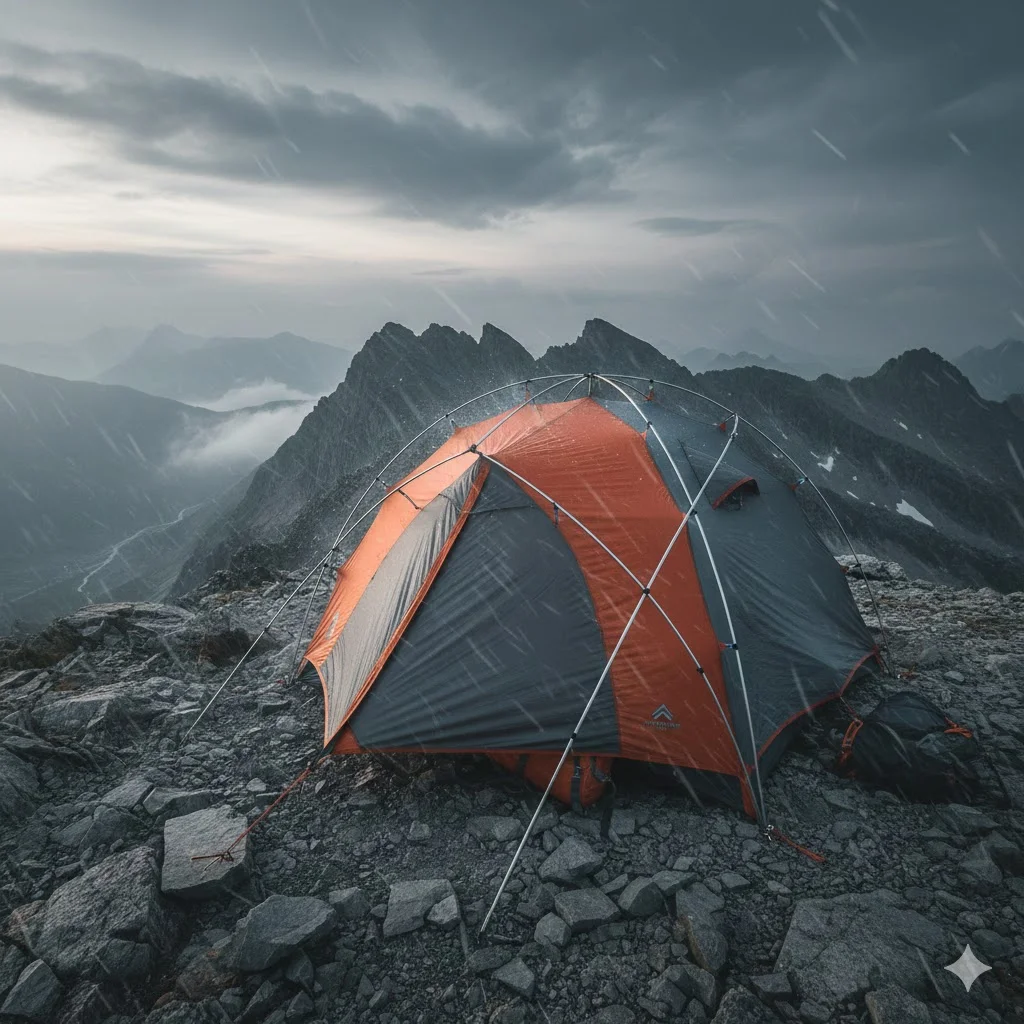
To transform this rigid metal into a high-performance component that can withstand the harshest mountain environments, it must undergo a critical thermal evolution known as Annealing (Softening). Today, we will break down this essential gateway process that tames hard metal into a pliable masterpiece.
1. The Paradox of 7001 Aluminum: Why Extreme Strength Needs Softening
The 7001 aluminum alloy is a powerhouse, primarily composed of zinc and magnesium. This chemical makeup gives it the highest yield strength profile in the 7000 series, which is why it is the exclusive choice for aircraft structures and elite-level tent poles. However, this inherent strength comes with a major catch: it is incredibly difficult to handle during the manufacturing phase.
When a pipe has just been extruded, its internal crystal structure is densely packed and under immense pressure. In metallurgy, we call this “Work Hardening.” In this state, the metal is exceptionally rigid and brittle. If we were to jump straight into the ‘Drawing’ process—where the pipe is stretched to achieve precise wall thickness and diameter—the results would be disastrous. The metal would snap like a dry twig in winter, or worse, develop invisible micro-cracks that lead to sudden failure in the field.
This is where Softening (Annealing) becomes mandatory. Think of it like a frozen rice cake: if you pull it while it’s cold, it tears. But if you put it in a steamer and apply heat, it becomes incredibly stretchy and resilient. Annealing is exactly that. It allows the 7001 alloy to temporarily set aside its “hardness” to gain the “ductility” and “flexibility” required for intense mechanical shaping. Without this step, even the most expensive raw materials will inevitably result in a defective product.
2. The Science of the 400°C Threshold: Atomic Rearrangement
Annealing is far more than just “lighting a fire” to heat the metal. It is a sophisticated thermal operation designed to induce precise physical changes at the molecular level. In professional manufacturing facilities, we adhere to rigorous standards to ensure the alloy’s integrity.
Typically, 7001 aluminum requires heating at 400°C (752°F) or higher for a duration of 4 to 5 hours. This specific window is backed by scientific data regarding the ‘Recrystallization’ temperature. This is the critical point where the internal stresses are completely relieved, and the metal’s grain structure resets into a softer, more stable state.
However, the total process is a long-distance race, often taking 15 to 20 hours when you factor in the following stages:
- The Heating Phase: The furnace temperature is raised gradually. Rapid thermal expansion can put immense strain on both the pipes and the equipment, leading to warping.
- The Soaking Phase: Once at 400°C+, the atoms move freely to soften the tissue. If this time is cut short, the “core hardness” remains, leading to snapping during the next stage.
- The Cooling Phase: We use Furnace Cooling or slow cooling to allow the metal to stabilize without re-hardening prematurely.
If the temperature is even 20°C too low, or the time is short by an hour, the pipe will likely burst during the drawing process. Conversely, excessive heat can alter the chemical properties, making it impossible to reach the target strength during the final T6 Heat Treatment.
3. The Professional’s Obsession: Temperature Uniformity (TUS)
I often get asked, “Why does quality vary so much between different factories?” The answer almost always comes down to ‘Temperature Uniformity.’ In a massive industrial furnace, thousands of 7001 pipes are processed simultaneously. If the thermal history of a pipe differs based on its location in the furnace, the batch is already a failure.
In large-scale equipment, there can be a temperature gap of over 50°C between the top (near the heaters) and the bottom or corners (where airflow is restricted). This variance leads to catastrophic quality issues:
- Inconsistent Ductility: Some pipes become too soft and stretch unevenly, while others remain too hard and snap.
- Loss of Precision: Inconsistent softness leads to variations in the final outer and inner diameters. This is the root cause of tent pole joints being too tight or too loose.
- Durability Imbalance: When a finished tent pole snaps easily in one specific section, it is usually the result of non-uniform heating during this annealing phase.
This is why top-tier manufacturers perform a TUS (Temperature Uniformity Survey). They place dozens of sensors throughout the furnace to maintain a temperature variance within ±5°C. This invisible level of precision is what defines the reliability of the tent poles you trust in the wild.
[Technical Summary: 7001 Aluminum Annealing Checklist]
| Metric | Technical Standard | Impact on Quality | Priority |
| Target Temp | 400°C ~ 460°C | Recrystallization & Ductility | ★★★★★ |
| Soaking Time | 4 ~ 6 Hours (Proportional to volume) | Total stress relief | ★★★★★ |
| Cooling Method | Slow Furnace Cooling | Stabilization & Warpage prevention | ★★★★☆ |
| Furnace Variance | Under ±10°C | Consistency across the entire lot | ★★★★★ |
| Process Position | Between Extrusion & Drawing | Gateway to workability | ★★★★★ |
[Expert Quality Checkpoints]
- Point 1: Has the hardness of the sample been measured post-annealing to confirm ductility?
- Point 2: Is the circulation fan speed consistent to ensure heat reaches every corner?
- Point 3: Is there sufficient spacing between pipes to allow for optimal airflow?
- Point 4: Does the temperature graph show any sudden voltage drops or dips?
In conclusion, annealing may look like a quiet “waiting game,” but it is a battlefield of thermodynamic control. When this invisible process is executed perfectly, it creates the foundation for a premium 7001 tent pole that keeps your shelter standing when the gales begin to howl.
Interested in the next step?
- Curious about Phase 1: Aluminum Extrusion? [CLICK!!]
- Want to see the physical properties of heat-treatable aluminum alloys? [CLICK!!]
Join me in the next post as we explore Phase 3: The Drawing Process —the ultimate test of precision.