
Dot-com Bubble
Despite Big Tech giants, including Microsoft (MS), reporting earnings that surpassed market expectations, their stock prices plummeted due to concerns over future guidance and rising costs.
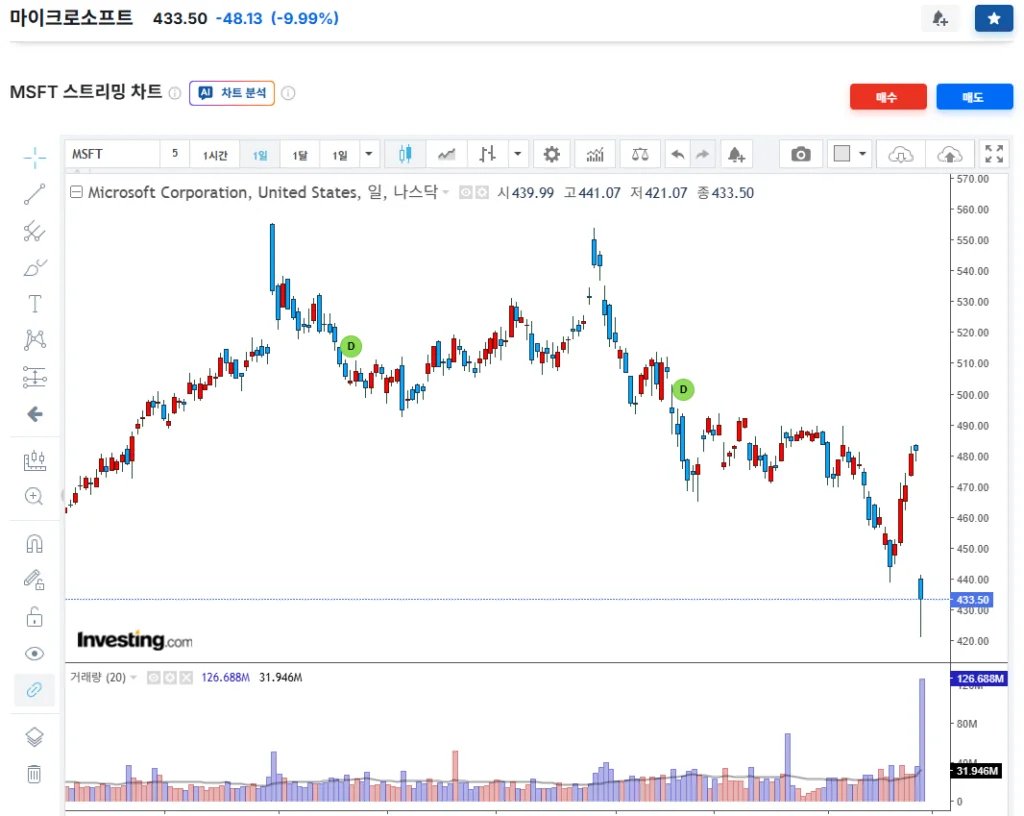
In response, voices of fear have emerged from the sidelines, whispering that a “Dot-com style” collapse of the early 2000s is imminent. However, a cool-headed analysis reveals the opposite: this volatility proves that the modern investment world has developed a robust, intelligent structure that makes it nearly impossible for a massive bubble to fester. The true risk we must watch is not an imaginary bubble, but a new form of systemic risk born from an “overly intelligent” market system.
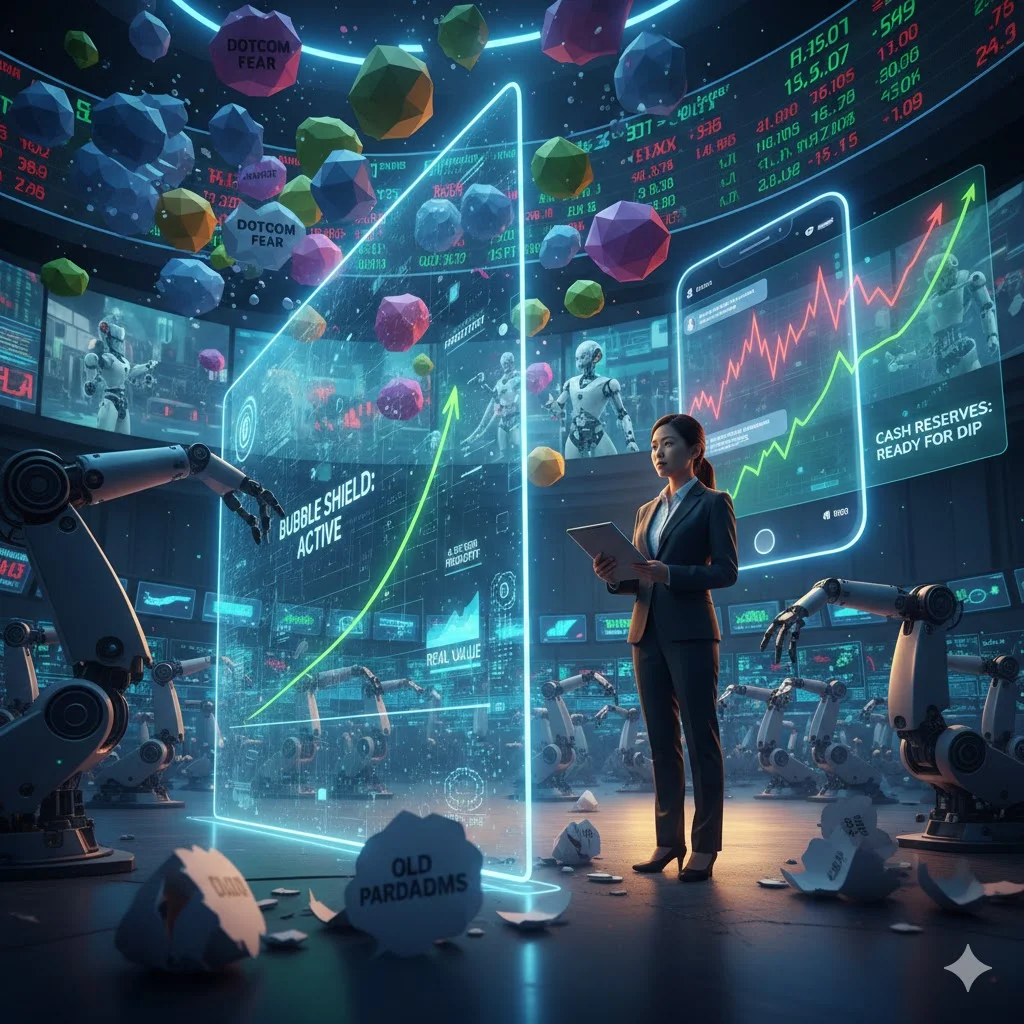
1. Why a Dot-com Bubble is Impossible: The Market’s Hypersensitivity as a “Bubble Suppressor”
Many compare the current AI boom to the Dot-com Bubble, but the decisive difference lies in the market’s “attitude.” During the Dot-com era, the market was an irrational playground fueled by blind money. Investors stood by as companies with no revenue and no business models skyrocketed simply because they added “.com” to their names. The lack of any self-correcting mechanism until the frenzy consumed the entire industry was the cause of that catastrophic crash.
But look at the market today. As seen in the reaction to Microsoft’s earnings, modern investors and systems are incredibly sensitive and demanding. Even with strong earnings, if future guidance misses expectations by a hair, or if the pace of AI monetization doesn’t immediately offset massive infrastructure investments, the market hits the “Sell” button instantly. In other words, today’s market operates as a “Real-Time Verification System” that refuses to let an unchecked, irrational bubble form. Paradoxically, this hypersensitivity is our strongest line of defense against a destructive crash. By frequently pruning excess and enforcing corrections, the market ensures that the industry won’t vanish into thin air like a mirage.
2. AI as a Permanent Framework: From “Fantasy” to “Utility”
Companies during the Dot-com era survived solely on “future promises,” but today’s AI is a “reality” that has already reshaped our daily lives and workflows. Look at your own workspace. In the past, searching for information meant wading through a forest of ads on portals; now, we consult AI to analyze data and draft expert-level content in minutes. The intellectual worker has evolved from a mere “producer” to a “Final Reviewer” of AI-generated output.
This leap in productivity has become an irreversible “frame of reality.” If AI were to disappear tomorrow, global knowledge work would be paralyzed. This is not a fad; it is a fundamental restructuring of the global economy. Furthermore, as AI integrates with hardware—the era of Physical AI—and begins to replace physical labor, its profitability and impact will reach unprecedented levels. AI’s dominance over both intellectual and physical labor is an inevitable future, and occasional market jitters are merely minor noise within this grand trajectory.
3. The Real Villain: The Algorithmic Trading Stampede
A “smarter” market means that mechanical responses now dominate the landscape. The real “villain” we must guard against is Algorithmic Trading. These bots are not moved by innovation; they react solely to “Numerical Triggers” and execute sell orders in 0.001 seconds.
The recent sharp drops should be viewed as “Systemic Seizures” caused by AI algorithms reacting simultaneously to specific metrics or the breach of key support levels, rather than a fundamental loss of corporate value. Because algorithms act mechanically based on quantitative data rather than qualitative context, they cause prices to plummet before retail investors can even react. This is not a “bubble bursting”—it is “Systemic Acceleration.” As AI advances, these algorithms become more integrated and learn similar patterns, intensifying “Herd Behavior” during critical market shifts.
4. Survival Strategies: Out-Structuring the Algorithmic Wave
If you cannot outpace a machine in speed, you must win with “Structural Defense” and a “Human Time Horizon.”
- Diversified Stop-Loss Orders: It is essential to set stop-losses at major support levels like the 60-day or 120-day moving averages. However, algorithms are skilled at “Stop-Hunting”—dipping prices just enough to trigger retail sell orders. Therefore, do not place your entire position at a single point. Distribute your risk across multiple support levels to prevent an artificial shakeout from wiping out your holdings.
- Maintaining Constant Cash Reserves: Irrational lows created by algorithms are, paradoxically, the best opportunities to acquire blue-chip stocks at a discount. Keeping a portion of your portfolio in cash allows you to maintain psychological calm and treat machine-generated fear as a “Sale Period.”
- Contrarian Buying via Price Alerts: Set multiple “Buy Limit Alerts” at prices so low they seem unreachable. When algorithms trigger a sell-off, your setup will allow you to receive the “gift” handed out by the machines while others are panicking. Remember, algorithmic trading doesn’t just hit the “Sell” button—it also creates entry points for the prepared.
[Comparative Analysis: Dot-com Bubble vs. Modern Intelligent Market]
| Factor | Dot-com Bubble (Past) | Modern Intelligent Market (Present) |
| Market Attitude | Blind Optimism & Neglect | Hypersensitive Real-time Verification |
| Bubble Structure | Massive Hallucination Formed | Immediate Correction (Bubble Suppression) |
| Core Driver | Unfounded Hype | Productivity Revolution & Cash Flow |
| Primary Seller | Retail Panic (Late) | Instantaneous Algorithmic Triggers |
| Defense Strategy | Total Market Exit | Exploiting Noise as a Contrarian Opportunity |
5. Conclusion: Conviction Over Machine Logic
We are wielding the most powerful productivity tools in human history. It would be a tragedy to let the fear of a past ghost—the Dot-com Bubble—blind you to the reality of the present. Modern volatility is a feature of a system that refuses to let bubbles grow out of control. Trust the utility of the tools you use every day, and use the machine-generated fear as a ladder to greater wealth.
[Related Posts]